New SolidWorks weekend intake starts 18 Aug — limited seats available.

03-8063 0414

Human Resource

Essential Leadership and Management Skills for Managers & Supervisors

Develop practical workplace misconduct and industrial relations management skills with our 2-day, HRD Corp claimable Workplace Misconduct & Industrial Relations Training Course at CAD Training Centre. Master disciplinary procedures, domestic inquiries, dismissal letters, and dispute resolution using Malaysian case reviews. Classroom, online, and in-house training options available.

  • Duration 2 Days
  • Level Intermediate
  • Format Face-to-face

About this course

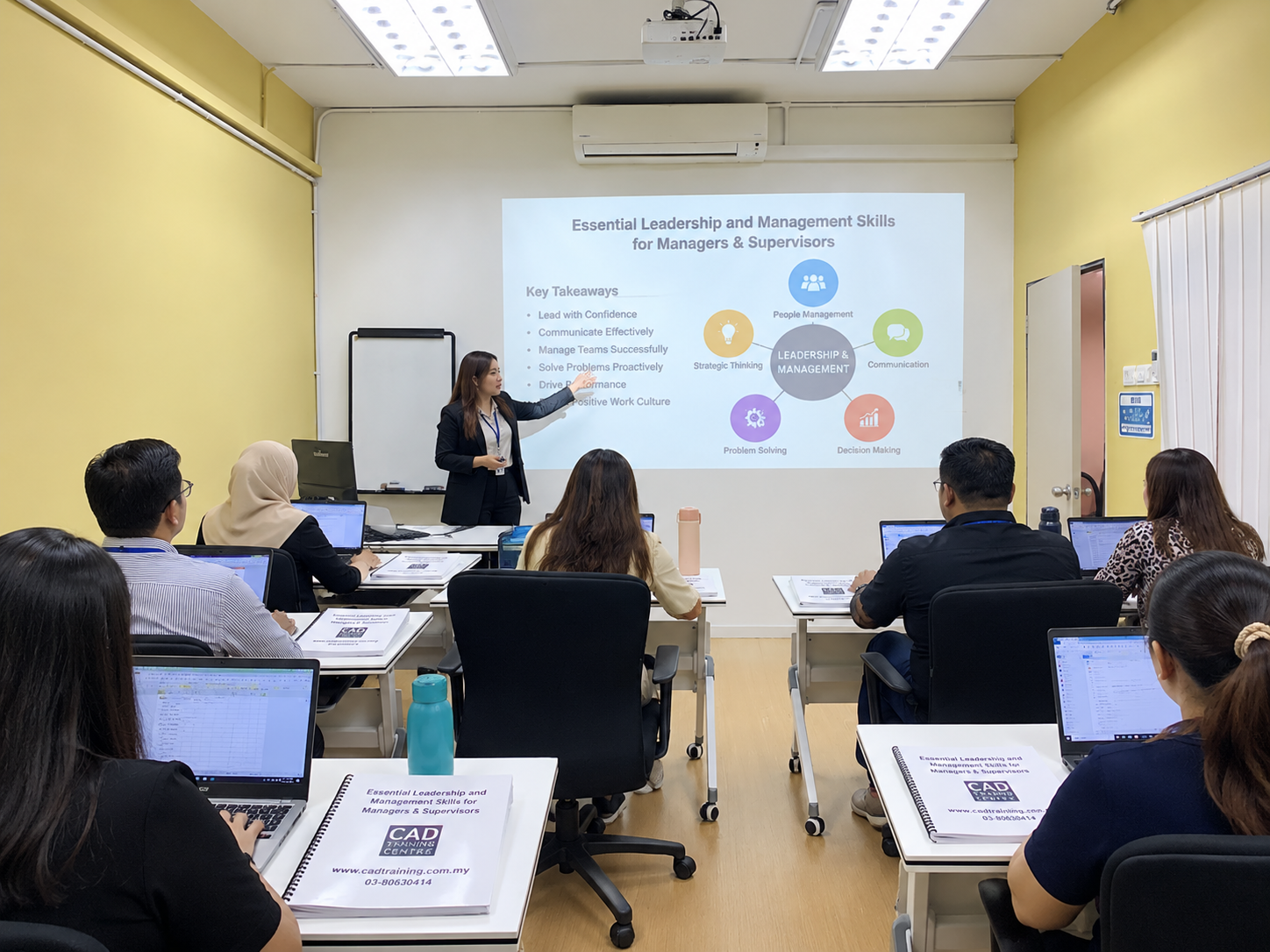
 The Leadership & People Management Training Course at CAD Training Centre is a comprehensive, HRD Corp claimable program designed for team leaders, supervisors, managers, and corporate executives in Malaysia. Practical and engaging, this expert-led workshop covers core leadership styles, effective communication, team motivation, emotional intelligence, and conflict resolution strategies. Training is available physically in Puchong, Selangor—with laptops provided—or via live online sessions, complete with a certificate of completion and free repeat classes.

Just got the promotion to become a manager but aren’t confident in what you’re doing, have no clue what goals to set, how to lead teams effectively, or you just want to refresh your memories and just maybe, want to add more into your existing repertoire?

Building Accountable Leaders is the primary goal of this Leadership Training. Leaders play a pivotal role in aligning teams towards business goals while managing the global pandemic— low morale—due to uncertainties and high demands for higher productivity, innovativeness, proactiveness, and  efficiency. This course aims to resolve that! By building an exemplary leader.

.This course covers four essential modules, beginning with understanding the differences between managers and leaders, developing a leadership mindset and building trust and credibility with team members. Participants will learn how to align team objectives with organisational goals, apply SMART goal-setting techniques, prioritise responsibilities and delegate tasks effectively. The training then introduces Situational Leadership and the GROW coaching model, helping participants understand how to adapt their leadership approach according to team members' capabilities and development needs. The day concludes with communication and feedback techniques, including active listening, effective questioning, constructive feedback and managing difficult workplace conversations. Day 2 introduces four additional modules focusing on managing employee performance, building high-performing teams, resolving workplace conflicts and improving personal leadership effectiveness. Participants will learn how to address underperformance, motivate employees, encourage collaboration, apply a five-step conflict resolution model and manage workplace disagreements professionally. The programme concludes with time and energy management techniques and the development of a practical 30-Day Leadership Action Plan.

Related Links

https://www.ccl.org/articles/leading-effectively-articles/prepare-first-time-leaders-success/
https://www.ccl.org/articles/leading-effectively-articles/first-time-managers-must-conquer-these-challenges/
https://www.atlassian.com/blog/strategy/how-to-write-smart-goalshttps://www.ccl.org/articles/leading-effectively-article/delegating-beyond-getting-it-off-your-desk/
https://www.mindtools.com/your-toolkit/coaching-goals/grow-model/
https://www.cipd.org/uk/knowledge/factsheets/performance-factsheet/


Learning Outcomes

  • Understand the differences between managers and leaders and develop the mindset needed to transition from an individual contributor to a confident team leader.
  • Build leadership credibility and establish trust through effective communication, accountability and professional leadership behaviour.
  • Apply SMART goal-setting, prioritisation and delegation techniques to align team activities with organisational objectives.
  • Understand Situational Leadership and use the GROW coaching model to guide, support and develop employees according to their individual needs.
  • Improve communication skills through active listening, effective questioning, constructive feedback and professional handling of difficult conversations.
  • Manage employee performance by setting clear expectations, identifying underperformance early and encouraging positive accountability.
  • Build high-performing teams through motivation, employee empowerment, psychological safety and effective conflict resolution.
  • Improve personal effectiveness through time management, balancing people and task responsibilities, and developing a practical 30-Day Leadership Action Plan.

Who is it for

  • Newly Promoted Managers and Supervisors who want to develop the confidence and practical skills needed to lead their teams effectively.
  • Team Leaders and Department Supervisors responsible for assigning tasks, monitoring employee performance and managing workplace responsibilities.
  • Junior Managers and Assistant Managers who want to strengthen their leadership credibility, communication and people management skills.
  • HR and Learning & Development Professionals responsible for developing leadership capabilities and supporting new managers within their organisations.
  • Project Leaders and Operations Managers who need to coordinate teams, manage priorities, resolve conflicts and deliver organisational objectives.
  • Aspiring Leaders and Working Professionals preparing for promotion into supervisory or management positions.

Course outline

Module 1

Day 1 — The Manager as a Leader

  • Understanding the differences between a manager and a leader
  • Exploring the responsibilities of managers and leaders in the workplace
  • Understanding the transition from individual contributor to team leader
  • Shifting the leadership mindset from being a doer to becoming an enabler
  • Learning how to build trust with team members
  • Developing leadership credibility
  • Understanding how leadership behaviour influences team relationships
  • Recognising the importance of accountability in leadership
  • Self-reflection activity to evaluate individual leadership approaches
  • Participating in small-group discussions about leadership challenges and experiences
Module 2

Setting Direction & SMART Goals

  • Understanding the importance of setting clear team objectives
  • Aligning team goals with organisational goals
  • Introduction to SMART goal-setting techniques
  • Understanding how SMART goals support clearer expectations and measurable results
  • Identifying important tasks and priorities
  • Applying prioritisation techniques to manage team responsibilities
  • Understanding the fundamentals of effective delegation
  • Learning how delegation supports team development and productivity
  • Exploring how managers can assign responsibilities more effectively
  • Participating in a practical goal-setting workshop
  • Applying delegation techniques through guided workshop exercises
Module 3

Situational Leadership & Coaching (GROW)

  • Introduction to the Situational Leadership Model
  • Understanding how leadership approaches can be adapted to different situations
  • Recognising differences in team members' capabilities and development needs
  • Choosing suitable leadership styles according to team maturity
  • Understanding how different employees may require different levels of leadership guidance
  • Introduction to the GROW coaching model
  • Understanding the purpose of structured coaching conversations
  • Exploring the application of GROW when developing team members
  • Using coaching techniques to support employee learning and development
  • Practising coaching conversations through role-play activities
  • Role-play exercise: Coaching a team member
Module 4

Communication & Feedback

  • Understanding the importance of effective communication in leadership
  • Developing active listening skills
  • Applying effective questioning techniques
  • Understanding how listening and questioning support better workplace communication
  • Learning how to provide constructive feedback
  • Recognising the importance of clear and professional feedback
  • Understanding how feedback can support employee development and performance improvement Identifying common challenges during difficult workplace conversations
  • Learning how to handle difficult conversations professionally
  • Applying effective communication techniques during challenging situations
  • Role-play exercise: Delivering constructive feedback in a difficult situation
Module 5

Day 2 — Managing Performance & Underperformance

  • Understanding the role of managers in monitoring employee performance
  • Setting clear performance expectations for team members
  • Monitoring employee progress against established expectations
  • Recognising signs of employee underperformance
  • Understanding the importance of addressing performance issues early
  • Exploring practical approaches to managing underperformance
  • Understanding positive accountability in performance management
  • Encouraging employees to take responsibility for their work and results
  • Recognising how consistent performance management supports team effectiveness
  • Case study: Handling an underperforming employee
Module 6

Building High-Performance Teams

  • Understanding the characteristics of high-performing teams
  • Exploring the importance of employee motivation
  • Identifying ways to motivate team members
  • Understanding employee empowerment
  • Encouraging employees to take ownership of their responsibilities
  • Introduction to psychological safety in the workplace
  • Understanding how psychological safety supports team communication and participation
  • Building stronger collaboration among team members
  • Encouraging teamwork and shared responsibility
  • Understanding how leadership approaches influence team performance
  • Group activity: Team problem-solving
Module 7

Conflict Management

  • Understanding common sources of conflict in the workplace
  • Recognising how workplace disagreements can affect team performance
  • Identifying situations that may lead to conflict between employees
  • Introduction to the five-step conflict resolution model
  • Understanding how structured conflict resolution supports effective workplace relationships
  • Applying conflict management techniques to practical team situations
  • Learning how to remain calm during challenging workplace situations
  • Managing emotional reactions when dealing with conflicts
  • Understanding the importance of professional and balanced communication
  • Exploring ways to mediate disagreements between team members
  • Role-play exercise: Mediating a team conflict
Module 8

Personal Effectiveness & Action Plan

  • Understanding the importance of personal effectiveness in leadership
  • Balancing task management with people management responsibilities
  • Identifying challenges when managing both operational tasks and employees
  • Applying practical time management techniques
  • Understanding personal energy management
  • Learning how to manage leadership responsibilities more effectively
  • Developing a leadership mindset based on accountability
  • Understanding how individual leadership behaviour influences team performance
  • Reflecting on personal leadership strengths and areas for improvement
  • Identifying practical leadership behaviours to develop after training
  • Creating a 30-Day Leadership Action Plan
  • Establishing actions to apply the leadership skills learned during the programme

Course format

Choose the delivery mode that fits your team and timeline.

  • 01

    Classroom

    Instructor-led sessions in our Bandar Puteri labs with guided exercises, live demos, and peer discussion.

  • 02

    Online

    Live virtual delivery with the same syllabus, shared files, and instructor checkpoints — ideal for distributed teams.

  • 03

    In-house

    Private cohorts for your organisation, scheduled around project deadlines with content tailored to your standards.

Upcoming schedule

Public intakes coming up.

Public dates for this course are being finalised. Enquire for private or corporate scheduling.

Certification & policies

Certificate of attendance

Receive a certificate of attendance upon completing the programme, suitable for HR records and continuous learning portfolios.

Free Repeat Class

Free Repeat Class: if you need another pass at the same public syllabus within 6 months, you may re-attend subject to seat availability.

Materials provided

  • Course workbook / digital notes
  • Exercise files and sample templates
  • Certificate of attendance
  • Post-class support window for clarification questions

Frequently asked questions

01 What is the Essential Leadership and Management Skills for Managers & Supervisors course about?

Our Essential Leadership and Management Skills for Managers & Supervisors Training Course helps participants develop practical leadership and people management skills needed to lead teams effectively. The programme covers leadership fundamentals, SMART goal setting, delegation, Situational Leadership, GROW coaching, workplace communication, performance management, team motivation and conflict resolution. Participants will learn how to build leadership confidence, establish trust, manage employee performance and develop a practical action plan to improve their leadership effectiveness.

02 Is the Leadership and Management Skills course suitable for beginners?

Yes. The course is suitable for beginners, particularly employees who have recently been promoted into supervisory or management positions. It is also suitable for team leaders, junior managers and professionals preparing to take on leadership responsibilities. The programme begins with fundamental leadership concepts before progressing to practical management techniques, including goal setting, delegation, coaching, feedback, performance management and conflict resolution.

03 Who should attend this Leadership Training Course?

This course is designed for newly promoted supervisors, team leaders, junior managers, aspiring leaders and professionals responsible for leading employees. It is also relevant to HR and Learning & Development professionals who want to develop leadership capabilities within their organisations. Participants who want to improve their communication, delegation, coaching and team management skills may benefit from the programme. The training is particularly suitable for professionals transitioning from individual contributor roles into positions involving people management.

04 What is the difference between a manager and a leader?

A manager is generally responsible for planning, organising, coordinating and monitoring work to achieve organisational objectives. A leader focuses on guiding, influencing, motivating and developing people to achieve shared goals. Both responsibilities are important when managing a team. During Day 1, participants will explore these differences and learn how to transition from completing tasks independently to enabling others to perform effectively. The module also focuses on building leadership credibility, trust and accountability.

05 Will I learn how to set SMART goals and delegate tasks effectively?

Yes. Day 1 includes a dedicated module on setting direction and SMART goals. Participants will learn how to align team objectives with organisational priorities, establish clear goals and prioritise responsibilities. The course also introduces effective delegation techniques to help managers assign tasks, distribute responsibilities and support team productivity. A practical workshop allows participants to apply goal-setting and delegation techniques to workplace situations.

06 What is Situational Leadership, and how will I learn to apply it?

Situational Leadership is an approach that involves adapting leadership behaviour according to the needs, capabilities and development levels of team members. The course introduces the Situational Leadership Model and explores how managers can select suitable leadership styles for different employees and circumstances. Participants will learn why some team members require more guidance, while others may benefit from greater independence and responsibility. The training includes practical exercises to help participants understand how leadership approaches can be adapted to workplace situations.

07 How will this course help me manage underperforming employees?

Day 2 includes a dedicated module on Managing Performance and Underperformance. Participants will learn how to set clear performance expectations, monitor employee progress and recognise performance issues early. The course also introduces positive accountability and the importance of addressing performance concerns consistently. A practical case study involving an underperforming employee helps participants understand how to apply performance management concepts to workplace situations.

08 What will I learn about building high-performance teams?

The course introduces leadership practices that support team motivation, empowerment, psychological safety and collaboration. Participants will learn how to encourage employees to take responsibility for their work and contribute more effectively to team objectives. The programme also explores the importance of building trust and creating an environment where employees can communicate and collaborate. A group problem-solving activity provides participants with an opportunity to apply these concepts in a team setting.

09 What is psychological safety, and why is it important in leadership?

Psychological safety refers to an environment where team members feel able to share ideas, ask questions, raise concerns and acknowledge mistakes without fear of humiliation. It can support communication, collaboration and employee participation. Day 2 introduces psychological safety as part of building high-performing teams. Participants will explore how leaders can encourage collaboration, strengthen workplace relationships and create an environment that supports team effectiveness

10 How long does the Essential Leadership and Management Skills course take?

The course takes two days, with training sessions running from 9:00 AM to 5:00 PM Day 1 focuses on leadership fundamentals, SMART goals, delegation, Situational Leadership, GROW coaching, communication and feedback. Day 2 covers performance management, high-performing teams, conflict resolution and personal leadership effectiveness. Training includes interactive discussions, individual reflection, group activities, practical workshops, case studies and role-play exercises.

11 Do I need to bring my own laptop for the Leadership Training Course?

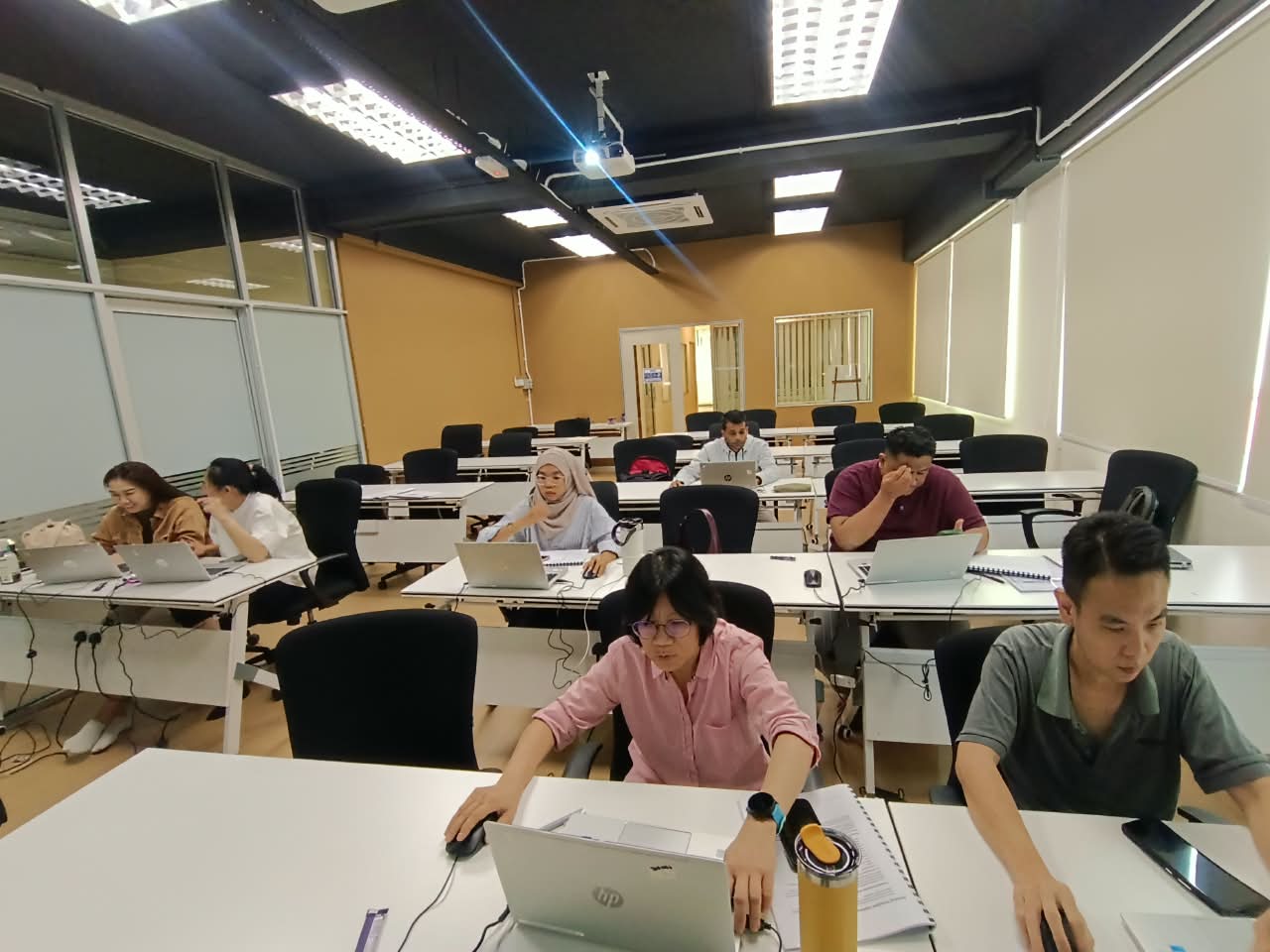
No. CAD Training Centre provides laptops for participants attending physical classes at our Puchong centre. You may bring your own laptop if preferred. The course focuses mainly on practical leadership development through workshops, group discussions, case studies, coaching exercises and role-play activities. Training handouts and reference materials are also provided.

12 Will I receive a certificate after completing the Leadership Training Course?

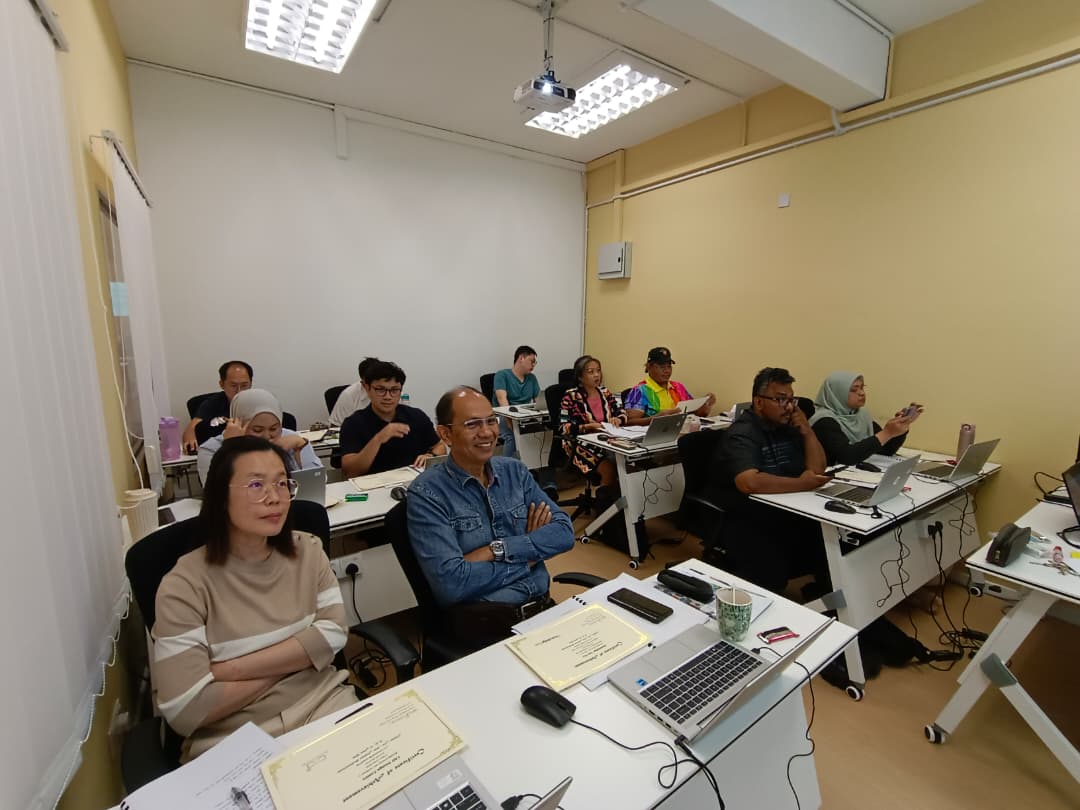
Yes. Participants receive a Certificate of Attendance after completing the Essential Leadership and Management Skills for Managers & Supervisors Training Course. The certificate recognises participation in the 2-day leadership development programme covering people management, communication, coaching, performance management and conflict resolution.

13 What language is the Leadership and Management Skills course conducted in?

The training is conducted bilingually in English and Bahasa Melayu.

14 Is the Essential Leadership and Management Skills course HRD Corp claimable?

Yes. Our Essential Leadership and Management Skills for Managers & Supervisors Training Course is HRD Corp claimable, subject to applicable eligibility and approval requirements.

15 Can the Leadership Training Course be arranged for corporate or in-house training?

Yes. CAD Training Centre offers this programme as in-house and corporate training for organisations. The current training schedule lists the course as available for groups of five or more participants. Training arrangements can be discussed with our team to determine a suitable venue, delivery format and quotation based on the organisation's requirements. The course can help organisations develop newly promoted supervisors, managers and team leaders through a structured leadership development programme.

16 Is there a surau (prayer room) available at CAD Training Centre?

Yes, we have a surau available at our training centre in Puchong. Muslim participants can use the prayer room during breaks throughout the training day.

17 Can I attend the Leadership and Management Skills training online instead of in a classroom?

Classroom training means physical attendance in Puchong with face-to-face guidance and co-learning with other participants. Online training runs live via Zoom with hands-on, screen-shared exercises, better if you're outside the Klang Valley or want to save on travel time. The main training schedule currently lists this programme as in-house training only. Please confirm the available physical or online arrangements before registration.

18 Can I repeat the Leadership and Management Skills course if I need more practice?

Yes, free repeat classes are offered, no questions asked, if you need a refresher.
Next step

Register your interest

Share a few details and we will confirm seats, HRD Corp claimability, and the best public or in-house option for this course.

Training type