New SolidWorks weekend intake starts 18 Aug — limited seats available.

03-8063 0414

Mandatory Compliance Governance

Mandatory PDPA Compliance & Cybersecurity Essentials

Strengthen cybersecurity with our 3-day, HRD Corp claimable PDPA & Cybersecurity Practitioner course at CAD Training Centre. Covers PDPA 2024 Amendments, threat assessments, incident planning, and a hands-on 72-hour breach response simulation. Physical, online, and in-house classes available."

  • Duration 2 Days
  • Level Basic
  • Format Face-to-face

About this course

The PDPA Compliance & Cybersecurity Essentials Training Course at CAD Training Centre is a comprehensive, HRD Corp claimable program designed for business owners, human resource managers, IT professionals, and corporate compliance teams in Malaysia. Available in 2 Levels. Spanning vital data protection principles under the Personal Data Protection Act and foundational cybersecurity best practices, this beginner-friendly, hands-on workshop covers data governance, privacy regulations, threat mitigation, and secure information handling. Training is available physically in Puchong, Selangor—with laptops provided—or via live online sessions, complete with a certificate of completion and free repeat classes.

Many organisations collect and manage personal data every day, but not every team fully understands how PDPA compliance, the Personal Data Protection Act, and cybersecurity responsibilities affect their daily decisions. From employee records and customer databases to vendor information, payroll details, biometric data, phishing threats, ransomware risks, and breach reporting obligations, one small mistake can expose the organisation to legal, financial, and reputational consequences.

This PDPA Compliance & Cybersecurity Training helps participants understand the practical requirements of the Personal Data Protection Act, PDPA 2024 Amendments, and Cyber Security Act 2024 in a clear and workplace-focused way. Instead of only focusing on theory, the programme guides employees, managers, Data Protection Officers, HR personnel, IT teams, compliance officers, and business leaders on how to recognise data protection risks, manage personal data securely, strengthen cybersecurity practices, support audit readiness, and respond effectively when a data breach occurs.

Participants may choose between the 2-Day Mandatory PDPA Compliance & Cybersecurity Essentials Programme or the 3-Day PDPA & Cybersecurity Practitioner Programme with 72-Hour Breach Response Simulation. Both programmes are designed to build practical awareness in privacy, security, accountability, and responsible data handling, while the 3-day practitioner course includes a more advanced breach response simulation covering reportability assessment, response team activation, regulatory notification, individual communication, and the 72-hour breach response process.

Related Articles on PDPA Compliance and Cybersecurity Training

Tay & Partners Guide on Preparing Personal Data Protection Notice

Christopher & Lee Ong Legal Update on DPIA Guideline

General Code of Practice of Personal Data Protection PDF

Global Compliance News Breakdown on Enforcement

Shearn Delamore PDPA Malaysia Compliance Guide

Learning Outcomes

  • Understand the key requirements of Malaysia's Personal Data Protection Act, PDPA 2024 Amendments and Cyber Security Act 2024.
  • Identify the legal responsibilities of business owners, directors, Data Protection Officers and employees handling personal data.
  • Understand mandatory data breach notification requirements, including breach documentation and reporting procedures
  • Apply practical approaches to Data Protection Impact Assessments (DPIA), internal risk reviews and security audits.
  • Recognise cybersecurity threats such as phishing, ransomware, deepfake scams and AI-driven attacks.
  • Understand security safeguards including multi-factor authentication, encryption and the principle of least privilege.
  • Develop a basic Incident Response Plan to help organisations respond to cybersecurity incidents and data breaches.
  • Improve organisational audit readiness and promote responsible personal data handling and digital ethics.

Who is it for

  • Business owners and company directors who need to understand data protection responsibilities, legal risks and organisational accountability.
  • Appointed Data Protection Officers (DPOs) responsible for overseeing personal data protection, breach documentation and regulatory communication.
  • HR and administrative managers who handle employee records, payroll information, biometric data and other personal information.
  • IT managers and system administrators responsible for cybersecurity safeguards, system access controls and preventing data leaks.
  • Compliance and risk officers involved in internal audits, privacy policies, risk assessments and regulatory requirements.
  • Legal and operations managers responsible for aligning organisational processes with data protection requirements and managing third-party risks.

Course outline

Module 1

Foundation – Data Privacy & The Regulatory Framework

  • Introduction to data privacy and personal data protection
  • Understanding why PDPA and the Cyber Security Act matter in 2026
  • Trainer and participant introductions
  • Setting expectations for the training programme
Module 2

The New Landscape of Malaysian Law

  • Overview of the Cyber Security Act 2024 (Act 854)
  • Understanding the PDPA 2024 Amendments
  • Identifying legal risks and liabilities for associated persons
  • Understanding the responsibilities and potential liabilities of company directors
Module 3

The Mandatory Data Protection Officer & Audit Readiness

  • Understanding which organisations must appoint a Data Protection Officer (DPO)
  • Identifying the duties and responsibilities of a DPO
  • Understanding potential personal liability
  • Learning about DPO registration procedures with the Commissioner
Module 4

Mandatory Breach Notifications

  • Understanding the 72-hour breach notification rule covered in the programme
  • Documenting personal data breaches
  • Creating and maintaining a breach register
  • Understanding when and how to notify the Personal Data Protection Commissioner
Module 5

Section 4 — Mandatory Breach Notifications

  • The 72-hour rule, documentation and maintaining a Breach Register, and when/how to notify the Commissioner
Module 6

Data Protection Impact Assessments (DPIA)

  • Conducting internal data protection risk audits
  • Understanding Data Protection Impact Assessments, Reviewing and updating privacy notices for 2026 requirements
  • Understanding data portability and its implications for organisations
Module 7

Internal Reporting & Data Rights

  • Understanding internal reporting and control mechanisms
  • Managing requests relating to the right to be forgotten
  • Understanding basic misconduct reporting procedures
  • Promoting responsible personal data management
Module 8

Day 1 Summary & Compliance Reflections

  • Reviewing key legal and compliance takeaways
  • Interactive questions and answers
  • Developing a privacy-first mindset within the organisation
Module 9

Anatomy of 2026 Cyber Threats

  • Understanding AI-enhanced phishing attacks
  • Recognising deepfake scams and social engineering risks
  • Understanding evolving ransomware threats
  • Identifying common cybersecurity risks in daily business operations
Module 10

Technical Safeguards & Access Control

  • Understanding multi-factor authentication (MFA), Applying encryption principles to protect sensitive information
  • Understanding the principle of least privilege, Reviewing technical safeguards required for security audits
Module 11

Developing an Incident Response Plan (IRP)

  • Understanding the purpose of an Incident Response Plan
  • Identifying essential procedures for responding to cybersecurity incidents
  • Practical workshop: Drafting a one-page emergency response protocol
Module 12

Final Audit Preparation & Summary

  • Preparing for potential NACSA and PDPC assessments or visits
  • Understanding organisational audit readiness
  • Building good cybersecurity hygiene practices
  • Reviewing key cybersecurity and data protection responsibilities

Course format

Choose the delivery mode that fits your team and timeline.

  • 01

    Classroom

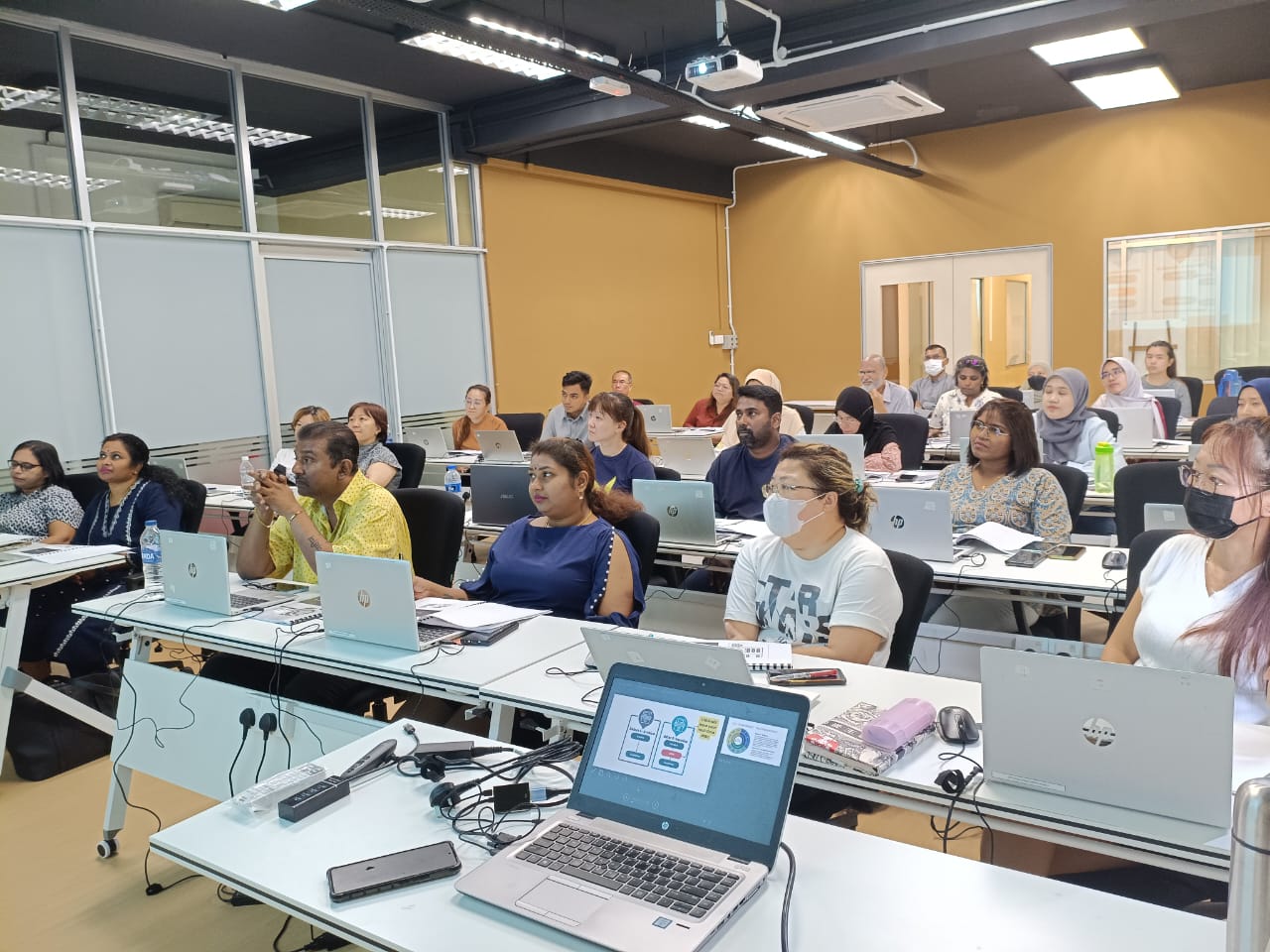
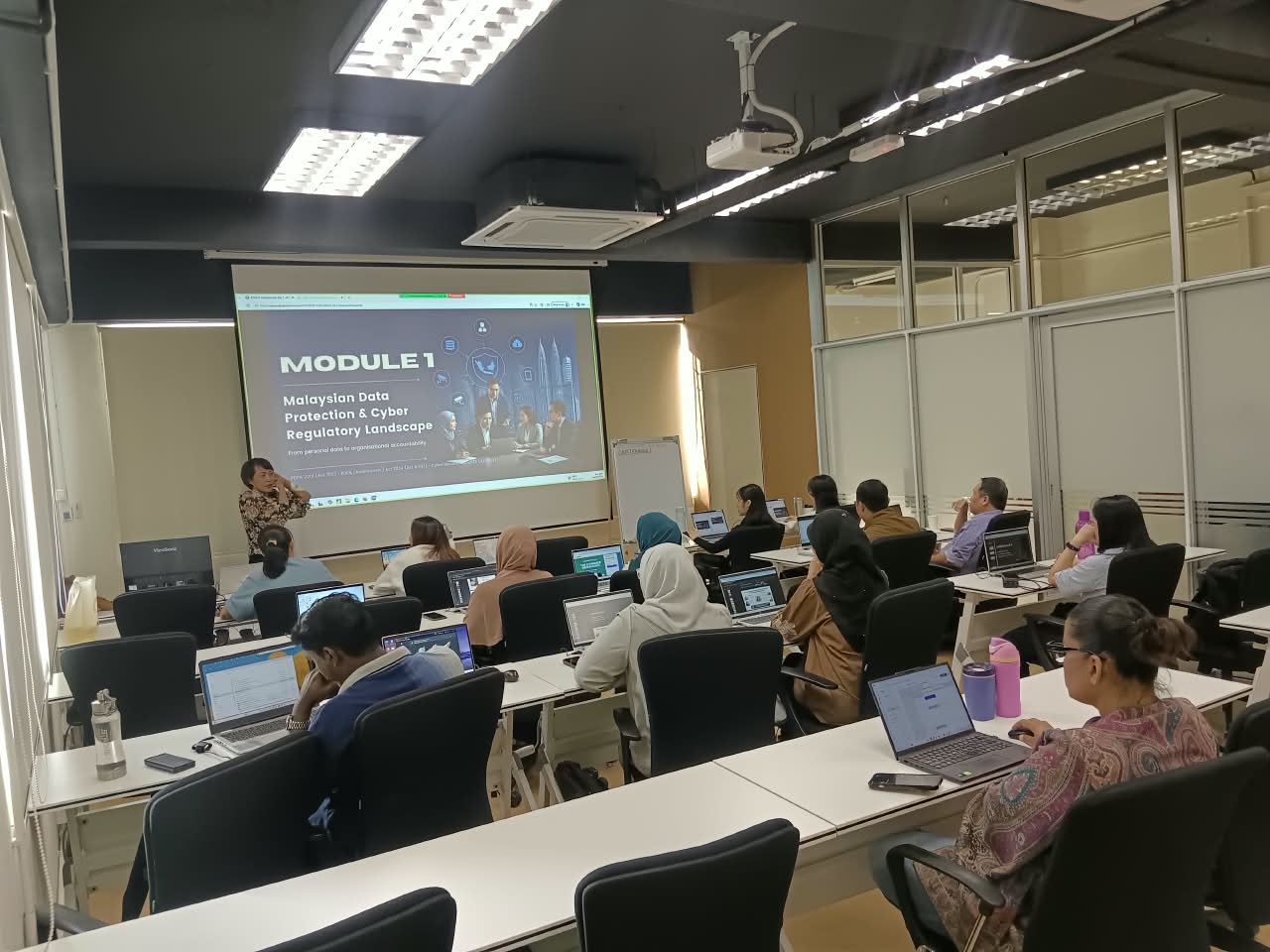
    Instructor-led sessions in our Bandar Puteri labs with guided exercises, live demos, and peer discussion.

  • 02

    Online

    Live virtual delivery with the same syllabus, shared files, and instructor checkpoints — ideal for distributed teams.

  • 03

    In-house

    Private cohorts for your organisation, scheduled around project deadlines with content tailored to your standards.

Upcoming schedule

Public intakes coming up.

  • 25 Nov 2026 - 26 Nov 2026 9:00 AM – 5:00 PM · Face-to-face

Certification & policies

Certificate of attendance

Receive a certificate of attendance upon completing the programme, suitable for HR records and continuous learning portfolios.

Free Repeat Class

Free Repeat Class: if you need another pass at the same public syllabus within 6 months, you may re-attend subject to seat availability.

Materials provided

  • Course workbook / digital notes
  • Exercise files and sample templates
  • Certificate of attendance
  • Post-class support window for clarification questions

Frequently asked questions

01 What is the Mandatory PDPA Compliance & Cybersecurity Essentials course about?

Our Mandatory PDPA Compliance & Cybersecurity Essentials course helps participants understand Malaysia's data protection regulations and essential cybersecurity responsibilities. The training covers PDPA 2024 Amendments, the Cyber Security Act 2024, Data Protection Officer responsibilities, data breach notification procedures, risk assessments and practical measures for protecting personal data.

02 Is the Mandatory PDPA course suitable for beginners?

Yes. This course is designed for participants who need a practical introduction to PDPA compliance and cybersecurity responsibilities. It is suitable for business owners, HR personnel, administrative staff, IT professionals and compliance teams. No formal prerequisite is specified in the course outline.

03 What is the difference between the 2-day Mandatory PDPA course and the 3-day PDPA Practitioner course?

The 2-day Mandatory PDPA Compliance & Cybersecurity Essentials course focuses on legal awareness, data protection responsibilities, cybersecurity risks, breach notifications and audit readiness. The 3-day PDPA & Cybersecurity Practitioner course includes the same foundational topics covered during the first two days, with an additional third day dedicated to a 72-hour breach response simulation. This includes assessing the severity of data breaches, activating response teams, preparing regulatory notifications and practising incident response procedures.

04 How long does the Mandatory PDPA Compliance & Cybersecurity Essentials course take?

The course takes two days, with training sessions from 9:00 AM to 5:00 PM. Participants will attend scenario-based discussions, case studies, practical exercises and interactive Q&A sessions.

05 What will I learn about data breaches and the 72-hour notification requirement?

You will learn about the mandatory breach notification framework covered in the PDPA training, including how to document incidents, maintain a breach register and understand notification procedures involving the Personal Data Protection Commissioner. The course also introduces Incident Response Planning to help organisations prepare for potential data breaches. Actual reporting obligations depend on the applicable legal requirements and circumstances of the breach.

06 Do I need to bring my own laptop for the PDPA and Cybersecurity training?

Laptops are provided for participants attending physical training at our Puchong centre. You may also bring your own laptop if preferred. The course focuses on discussions, case studies, compliance awareness and practical activities rather than advanced technical programming.

07 Will I receive a certificate after completing the Mandatory PDPA course?

Yes. CAD Training Centre provides a Certificate upon Attendance of its training programmes.

08 What language is the Mandatory PDPA Compliance & Cybersecurity Essentials course conducted in?

The training is conducted bilingually in English and Bahasa Melayu.

09 Is the Mandatory PDPA Compliance & Cybersecurity Essentials course HRD Corp claimable?

Yes. Our Mandatory PDPA Compliance & Cybersecurity Essentials Training Course is HRD Corp claimable, subject to the applicable eligibility and approval requirements. Eligible Malaysian employers can apply for training grants under the relevant HRD Corp scheme.

10 Can I attend the Mandatory PDPA training online instead of in a classroom?

Classroom training means physical attendance in Puchong with face-to-face guidance and co-learning with other participants. Online training runs live via Zoom with hands-on, screen-shared exercises, better if you're outside the Klang Valley or want to save on travel time.

11 Can I repeat the Mandatory PDPA course if I need more practice?

Yes, free repeat classes are offered, no questions asked, if you need a refresher.

12 Is there a surau (prayer room) available at CAD Training Centre?

Yes, we have a surau available at our training centre in Puchong. Muslim participants can use the prayer room during breaks throughout the training day.

Next step

Register your interest

Share a few details and we will confirm seats, HRD Corp claimability, and the best public or in-house option for this course.

Training type